The Negev Desert, with its arid landscape and challenging climate, might seem an unlikely canvas for a vibrant agricultural endeavor. Yet, for more than 50 years, our African Hebrew Israelite community in Village of Peace Dimona has cultivated a miracle here. From seemingly barren land, we have brought forth an abundance of life, demonstrating the power of faith, perseverance, and a deep respect for the Earth. This journey from desert challenges to productive organic agriculture is a cornerstone of our commitment to Mastering the Art of Living.
## Overcoming the Desert's Embrace When our community first settled in Dimona, the agricultural challenges were immense. Scant rainfall, scorching summer sun, and sandy soil presented formidable obstacles to growing food. However, guided by the vision of Abba, Ben Ammi Ben-Israel, and our principles of community responsibility and harmony with nature, our pioneers embraced this challenge. They understood that true sustenance begins with the soil itself.
## Nurturing the Soil, Sustaining Life Our early farmers embarked on a profound transformation, turning the sandy desert floor into rich, fertile ground. Through diligent application of composting techniques, mulching, and meticulous water management, they literally built the soil from the ground up. Ingenious drip irrigation systems were developed to maximize every precious drop of water, while carefully constructed shade structures protected delicate crops from the harsh desert sun.
Today, our farms proudly hold certification from the Israel Bio-Organic Agricultural Association. This commitment means we steadfastly avoid synthetic pesticides, herbicides, and fertilizers. Instead, we embrace natural methods such as companion planting, biological soil enhancement, and integrated pest management, working in harmony with the natural ecosystem. Our approach demonstrates a profound understanding of ecological balance.
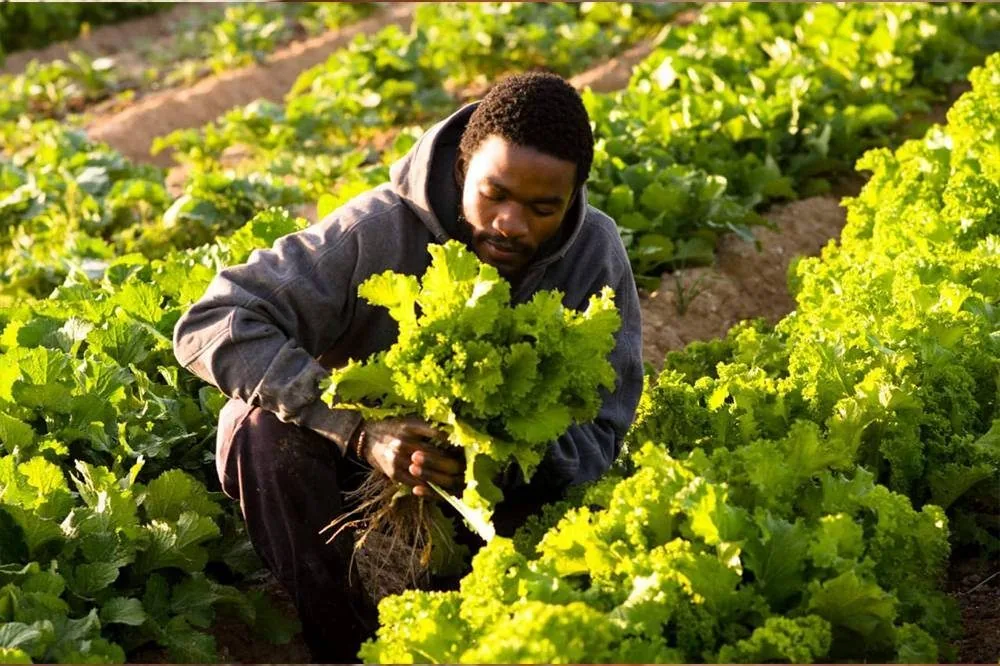
## From Farm to Table: A Holistic Cycle The bounty of our desert farms is truly remarkable, yielding an impressive variety of fruits, vegetables, herbs, and grains throughout the seasons. From succulent tomatoes and crisp cucumbers to vibrant leafy greens and wholesome legumes, our produce forms the foundation of our community's plant-based living. These fresh, organic ingredients not only nourish our families but also fuel the innovative operations of Teva Deli.
This seamless integration is a hallmark of our community's approach. Our farms feed the kitchens, where our cooks are trained and new recipes are developed. These culinary innovations then inspire the creation of over 200 plant-based products manufactured by Teva Deli, ensuring that nothing exists in isolation. It is a beautiful, self-sustaining cycle that embodies our holistic principles.
## A Living Classroom and a Model for the Future Beyond providing sustenance, our agricultural operation serves as a vital educational resource. We warmly invite visitors to the Village of Peace Dimona to tour our farms, witness our organic growing methods firsthand, and understand how sustainable agriculture can thrive even in the most challenging environments. It is an opportunity to learn about resilience and ingenuity.
As the world grapples with the realities of climate change and the urgent need to rethink food production, our agricultural model offers invaluable lessons. It stands as a testament to the power of working with nature, not against it, demonstrating a path toward greater resilience, sustainability, and communal well-being for all. We believe this approach provides a hopeful blueprint for future generations.
We invite you to explore the profound connection between our land, our food, and our way of life. Discover how dedication, wisdom, and collective effort can truly make the desert bloom, nourishing both body and spirit. Come witness this inspiring transformation for yourself and experience the essence of the Village of Peace.
Written by
Agricultural Division
Village of Peace Dimona