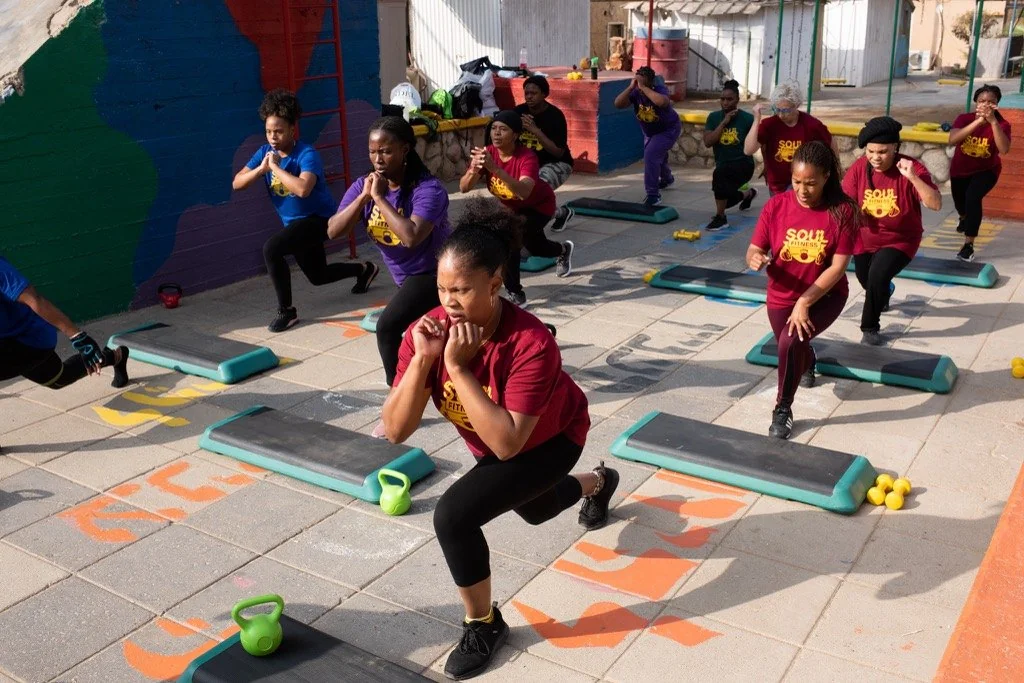
In the Village of Peace, love is a consciously practised social system, not just a feeling. Discover how discipline, responsibility, and appreciation build enduring community.
In many parts of the world, love is often spoken about as a feeling—something spontaneous, emotional, and deeply personal. While emotions are a beautiful part of the human experience, a thriving society cannot be sustained on feeling alone, as moods and circumstances can shift. Communities require something far steadier, something that transcends fleeting sentiments. In the Village of Peace Dimona, we understand love not merely as an impulse, but as a profound social system. It is a deliberate way of organising life, relationships, and collective responsibility, practised daily and maintained through appreciation, allowing our community to endure, grow, and remain stable for decades.
Love Beyond Emotion
Love defined only as emotion can indeed become unpredictable, making it an unstable foundation for a thriving society. However, when understood as a commitment to collective well-being, it offers profound dependability and consistency. In the Village of Peace, we measure love not by its intensity, but by the unwavering consistency of one's actions and contributions to the greater good. This means consistently showing up, even when it is inconvenient or challenging, and upholding our shared standards regardless of fluctuating emotions. In this deeper sense, love becomes a reliable pillar upon which a truly functioning society can depend, always choosing care over reactive impulses.
Discipline: Love in Action
Often, discipline is mistakenly viewed as restrictive. Yet, within the Village of Peace, we embrace discipline as a profound act of care and a vital expression of love. It is the essential structure that transforms good intentions into tangible reality, guiding our collective journey.
Our daily routines, shared values, and clear expectations form the very backbone of our communal life. These foundational elements protect our collective environment, creating a harmonious space without suppressing individual spirit or creativity. Just as a body requires bones to stand upright, a community needs structure to remain vibrant and healthy.
This consistent discipline fosters a deep sense of safety, significantly reducing chaos and enabling a profound trust among our members. When our youth grow up in an environment where guidance is consistent and grounded in genuine care, they learn that love is not unstable or fleeting. Instead, it is a constant force that corrects, guides, and always seeks to restore balance.
Responsibility: The Foundation of Care
Here in the Village of Peace, we deeply understand that responsibility is truly love in action. It means being fully accountable for how our individual behaviors impact others, recognizing that personal choices ripple outward into family life, community morale, and the well-being of future generations.
In a culture rooted in responsibility, appreciation naturally flourishes. When each person diligently fulfills their role—whether in caregiving, community work, teaching, or maintaining our shared spaces—gratitude flows organically. This is because everyone inherently understands and values the collective effort involved in sustaining our beloved community.
For us, appreciation is not merely reserved for special occasions or grand gestures. Instead, it is a thread woven seamlessly into the fabric of our daily life, a constant acknowledgment of our interconnectedness and shared purpose. This continuous recognition strengthens our bonds and reinforces our collective spirit, reminding us that every contribution matters.
Appreciation: The Social Glue
True appreciation is a profound act of recognition—it is seeing and valuing the often unseen labor that skillfully holds our society together. A lovingly prepared meal is appreciated not just for its nourishment, but for the time, intention, and care poured into it. A clean shared space is valued because someone consciously took responsibility for our collective environment.
Our elders are deeply appreciated for their wisdom, for embodying our continuity, preserving our memory, and offering invaluable guidance. When appreciation is consistently practised, it becomes an incredibly powerful stabilizing force, gently reminding each of us that we are an integral part of something far larger and more enduring than ourselves.
Love as Ongoing Maintenance
This vibrant culture of appreciation naturally encourages a profound sense of joy and contentment within our community. When individuals feel truly seen, and when their efforts are genuinely acknowledged, their contributions become infinitely more meaningful and deeply fulfilling. This mutual recognition fuels a cycle of positive engagement and shared commitment.
While heartfelt expressions of love—through words, thoughtful gestures, or symbolic acts—hold significant value, they alone cannot sustain a thriving community. Love, in its communal sense, must be consistently and diligently maintained, much like a precious garden.
This ongoing maintenance involves consistently tending to our relationships, addressing any tensions early before they escalate, and never allowing neglect to accumulate. It means caring for our physical spaces, nurturing our collective emotional health, and strengthening our social bonds with the same seriousness and dedication one would apply to essential infrastructure.
Just as roads require constant upkeep to remain passable and safe, our relationships and communal harmony demand continuous care to remain functional and resilient. This mindset transforms love from a fleeting emotion into an enduring, ongoing responsibility for all, ensuring our collective well-being.
Community Stability Through Consistent Practice
True stability, we have learned, does not arise from an absence of challenges or an unattainable perfection. Rather, it blossoms from unwavering consistency in our shared principles and daily practices. This steadfast commitment is the bedrock of our enduring communal life.
The Village of Peace has certainly faced its share of trials, much like any long-standing community. What has profoundly preserved us is not the absence of difficulty, but the steadfast presence of our shared principles, diligently practised and upheld over many decades.
When love is thoughtfully structured into the rhythm of daily life—through consistent discipline, mutual responsibility, and heartfelt appreciation—it creates an unbreakable continuity. Our youth grow up with clear expectations, our elders know they are deeply valued, and every individual feels a profound sense of belonging, rooted in our collective commitment.
A Model for a Fragmented World
Across the globe, many are actively searching for genuine community, sometimes without fully realising that true community demands both shared interests and shared responsibility. The Village of Peace offers a living example—not as a perfect blueprint for replication, but as a powerful reminder that love can indeed be organised, consciously practised, and beautifully sustained.
When love is embraced as a comprehensive social system, it becomes an unshakeable foundation for collective life. Appreciation naturally transforms into a daily habit, discipline is understood as profound care, and responsibility becomes the very essence of our connection to one another.
In a world increasingly defined by individualism, our approach in the Village of Peace communicates softly yet powerfully. It fosters remarkable stability, ensures continuity across generations, and cultivates a profound sense of collective dignity, demonstrating that love's true power lies not in its volume, but in its unwavering authenticity.
Here, love is intricately woven into the very fabric of everyday life—through shared meals, consistently upheld standards, mutual accountability, and daily appreciation. It is consistently an action, not merely a fleeting word. Perhaps the most profound question for our time is not 'How do we feel about one another?' but rather, 'How are we choosing to live together, day by day?' When love is a lifestyle, it truly unites communities—bridging generations, overcoming challenges, and enduring through time.
Written by
Yahav Ben Sar Ahmadiel
Village of Peace Dimona