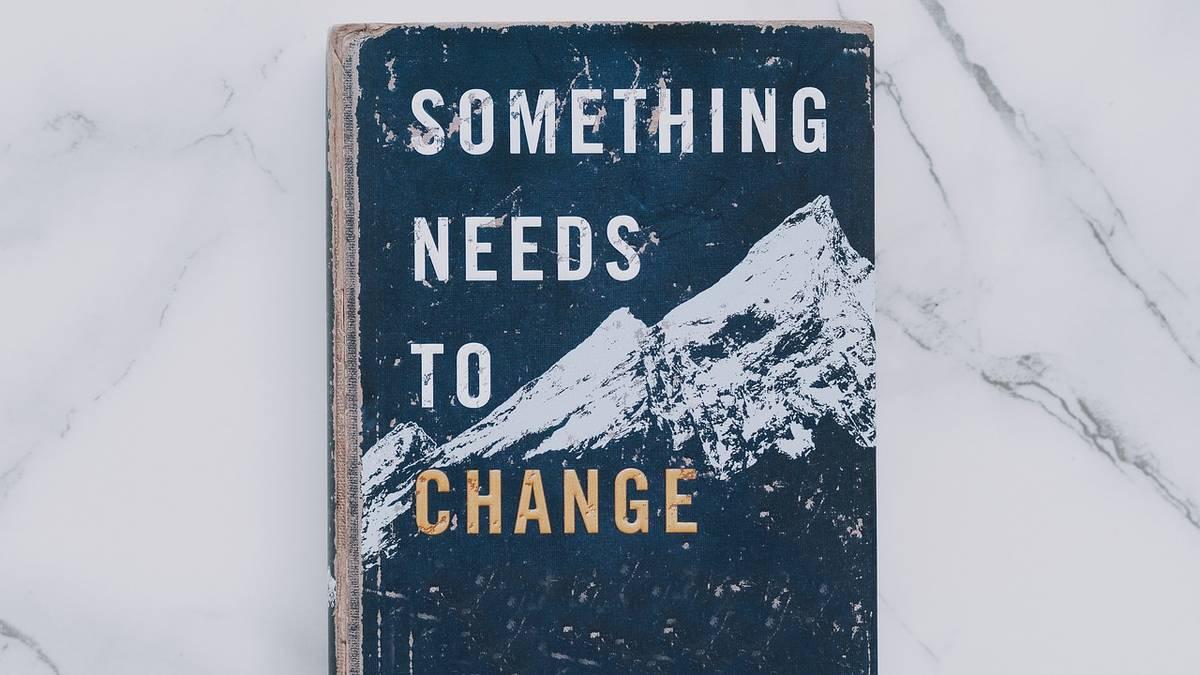
Change can bring greater clarity of vision, and greater commitment to one’s purpose in living a healthful, helpful, and holistic life.
Part of Mastering the Art of Living involves mastering change. At this time of year, change in many parts of the world is being marked at personal, familial, communal, and even national levels – be it for spiritual and or seasonal reasons.
Everywhere, everyone is dealing with it in some way. In fact, from the very beginning, change has been one of the few constants of the Human Family, across the planet.
Managing Change
Change is inevitable – it’s going to HAPPEN. It can be slow and measured (and for many, much more manageable). Or it can be completely unpredictable, instantaneous, even brutal. Obviously, it’s naïve to think that all change is good, welcomed, and can be managed. Change for some can be marked by anxiety, resignation, or outright fear. Altering habits, rituals, approaches, perceptions… it can be overwhelming for sure. For others, change is met with the excitement of a chance to renew, recalibrate, and refocus.
It’s a fact that the brain is structured to want to categorize, quantify, and organize things, keep them familiar in order to more efficiently use energy. In fact, the way our brains are wired, change is initially perceived as a threat – so the brain initially resists it.
The brain loves routine, the more information it can store in the familiar territory, the less energy it has to use processing those things over and over again. And admittedly, being able to move “on autopilot” can save us countless hours and lots of energy having to relearn daily things, over and over and over… Familiarity might not “breed contempt” but it can do a lot to stop growth.
Dr. Hafeez also says later in the article,
Neuroscience teaches us that in order for the brain to grow, new neuropathways have to be created and that can only happen with new experiences and new challenges. In a 2018 NBC news article “How to Train Your Brain to Accept Change According to Neuroscience,”Dr. Sanam Hafeeza licensed clinical psychologist and neuropsychologist explained,“emotionally and cognitively and executively the brain has established a lot of pathways. The more you do something the more ingrained it becomes in neural pathways, much like how a computer that stores the sites you visit — when you log onto your browser, they will pop up because you use them a lot.”
“You absolutely can and should teach your brain to change… “if you stretch your brain past its comfort zone, you’re opening the door to being receptive to other types of change.”
Different environment, different responses, different person?
Tips for Positive Change
Those who exercise know that the only way to grow newer, stronger muscles, is to increase the challenge that the muscles have become accustomed to. The increasing load causes the muscle tissues to develop tiny tears and after a period of rest, they come back even stronger. Change, particularly when it can be managed even a little bit, can produce the same result: a greater clarity of vision, andgreater commitment to one’s purpose in livinga healthful, helpful, and holistic life.
Want to build that brain? Try taking a new route to a favorite place and possibly uncovering a new experience. Try reaching for that new “wildly” exotic bag of herbal tea instead of the same old tried non-organic, sugar and caffeine-loaded drink you might usually have. What really would happen if we intentionally added a few extra moments of something helpful to our daily routine in place of that thing or “things” that deep down we know, aren’t the best for us?
Never thought you had a green thumb? Try planting one seed left over from a vegetable or fruit you just ate and watch it grow! You don’t need any elaborate, sometimes just a bit of soil and a repurposed container or cup that was lying around. INTENTIONALLY taking the time to learn how to grow/nurture that newly emerging life, could elicit a new spark of curiosity whose harvest could be a massive change in your perception of food and eating!
Normally not an early riser but you want to get more done, trynothitting that snooze button and getting up 15 minutes earlier. If you habitually stay up late, try going to bed 15 or even 30 minutes earlier and see if you feel more refreshed.
There are thousands, maybe hundreds of thousands of things, small and big that we can tweak a bit, that can healthily push us out of our comfort zones and “stretch the brain” toward a newer and greater ability to “Master the Art of Living!”
“Habit, sometimes is the sweetest of prisons.”
Written by
Sgan Yahgdeer
Village of Peace Dimona — Mastering the Art of Living