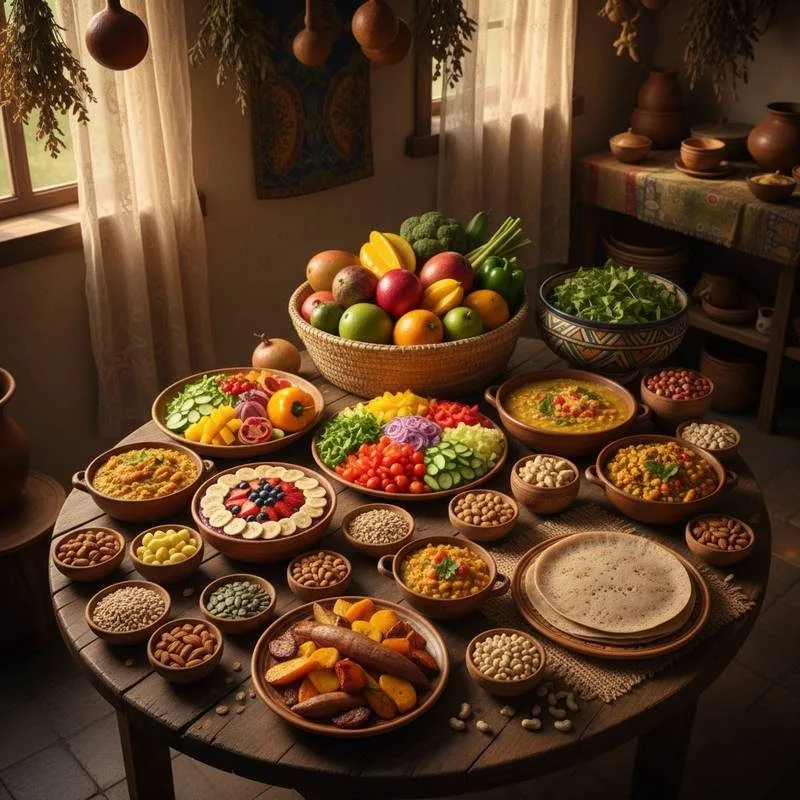
In the Village of Peace, we understand that food is much more than mere sustenance; it is a source of joy, connection, and a cornerstone of our holistic well-being. From vibrant community feasts to the simple pleasure of a home-cooked meal, food weaves itself into the fabric of our lives, nourishing both body and spirit. For generations, our people have celebrated the power of food to bond us, soothe us, and elevate our deepest joys.
Food, Our Sacred Sustenance
At its essence, food is a sacred gift, designed to nourish our bodies and uplift our spirits. It fuels our daily journey, enabling us to achieve our purpose and contribute to our community. In our early years, many of us develop an intimate connection with food, often learning to prepare and appreciate it from a young age, recognizing its role in our creative expressions and communal gatherings. However, in today's world, the abundance and expanded definition of 'food' can present unique challenges, often leading us away from its true purpose.
Understanding Portions and Servings
The modern landscape often encourages larger portions, from 'super-size' options to expansive plates. This shift has significantly altered our eating patterns, with what was once considered a single serving growing considerably over time. It’s important to distinguish between a portion size—what we choose to put on our plate—and a serving size, often a standardized measure intended to help us understand nutritional content. While these guidelines have evolved, the underlying principle remains: awareness of how much we consume is vital for maintaining balance and avoiding excess.
When and How We Eat: Timing and Awareness
With food readily available almost around the clock, and constant visual stimuli from media, it’s easy to find ourselves reaching for sustenance at all hours. This raises an important question: does when we eat impact our well-being? Our bodies are designed to perform with proper fuel, and while calories are essential, excess intake, especially late at night, can negatively affect digestion, restful sleep, and our energy for the next day.
Studies, such as one published in Cell Metabolism, suggest that late eating can increase hunger, affect appetite-regulating hormones, and decrease daytime energy expenditure. Many holistic health practitioners and studies, like those from the Cleveland Clinic, suggest considering a pause in eating at least three hours before transitioning to sleep. If hunger strikes before bed, certain foods like almonds, tart cherry juice, walnuts, kiwi, and chamomile tea are often recommended for their potential to aid restful sleep.
Cultivating Mindful Eating Practices
Cultivating mindful eating is a profound journey, one that invites us to deepen our relationship with food daily. There are many paths to explore, and we encourage you to discover what resonates best with your own rhythm and needs. Here are some practices we can embrace to foster a more intentional connection with our food:
- Take smaller portions: Many of us grew up in a 'clean your plate' culture, where finishing everything was paramount. While our youth may have had boundless energy to burn those calories, our bodies mature, and our needs evolve. Consider starting with a modest portion, knowing you can always return for more if your body genuinely signals hunger.
- Utilize smaller dinnerware: A simple shift to smaller plates or bowls can naturally guide us toward more appropriate portion sizes. Learning to arrange food neatly and appreciate its visual appeal can also help prevent an overly crowded plate, allowing us to savor each element.
- Savor each bite: Inspired by the wisdom of my life partner, I’ve learned to slow down and truly savor each mouthful. This practice invites us to identify and appreciate every ingredient, transforming eating into a meditative experience rather than a rushed consumption. When we eat slowly, our bodies have time to register fullness, preventing that uncomfortable stuffed feeling.
- Minimize distractions: In a world full of digital noise, it’s easy to eat without truly being present. We invite you to detach from screens and other media during meals, allowing eating to be your primary focus. While communal eating with loved ones is a cherished ritual in our community, ensuring that the act of eating itself doesn't become a background activity allows us to fully appreciate the taste, sight, smell, and texture of our food.
- Differentiate between hunger and habit: As the saying goes, 'You're not hungry, you’re bored.' It’s a powerful observation that gained prominence during times of confinement, yet the tendency to use food as a diversion predates any specific period. Food holds deep emotional connections for many of us. We invite you to pause and discern if your desire to eat stems from genuine physical hunger or if it’s a reflex, a diversion, or an emotional response. Cultivating this awareness is a profound step in mastering our relationship with food.
By embracing mindful eating, we honour our bodies, elevate our spirits, and contribute to the vibrant health of our community. This practice is not about restriction, but about liberation—liberation from unconscious habits, and an invitation to truly Master the Art of Living through conscious nourishment. What small step can you take today to eat more mindfully?
Written by
Sgan Yahgdeer
Village of Peace Dimona